

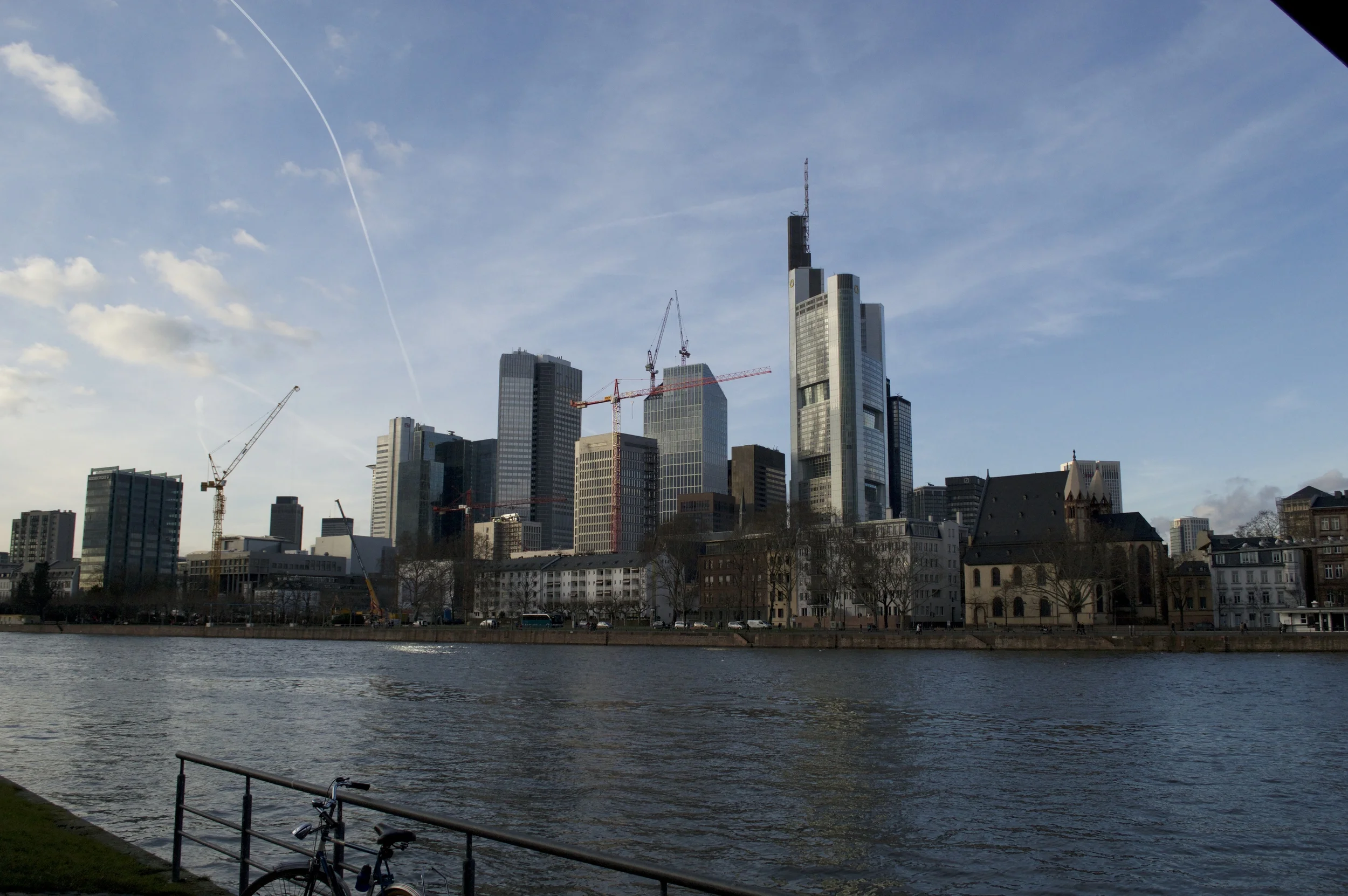
VC Meeting Frankfurt
Yesterday I attended the VC Meeting Frankfurt, a regular lunch event hosted by Aurelia Private Equity. I didn't have any expectations because it was my first time attending one these events. It turned out to be one of the larger and more valuable lunch events I've been to in Frankfurt. A very efficient program and solid networking opportunities. Of course my limited (none) understanding of German hampered my participation in asking questions of the presentations.
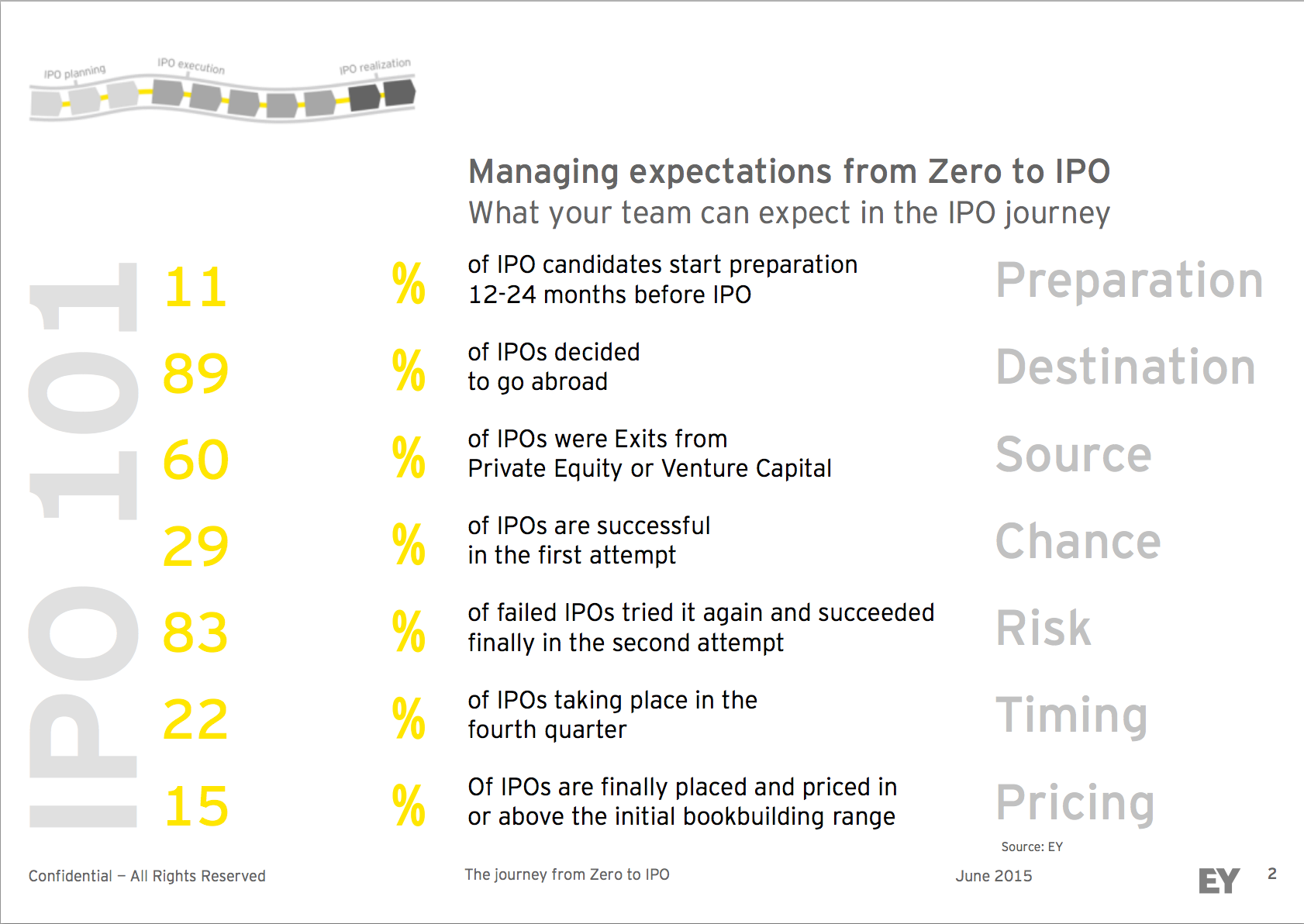
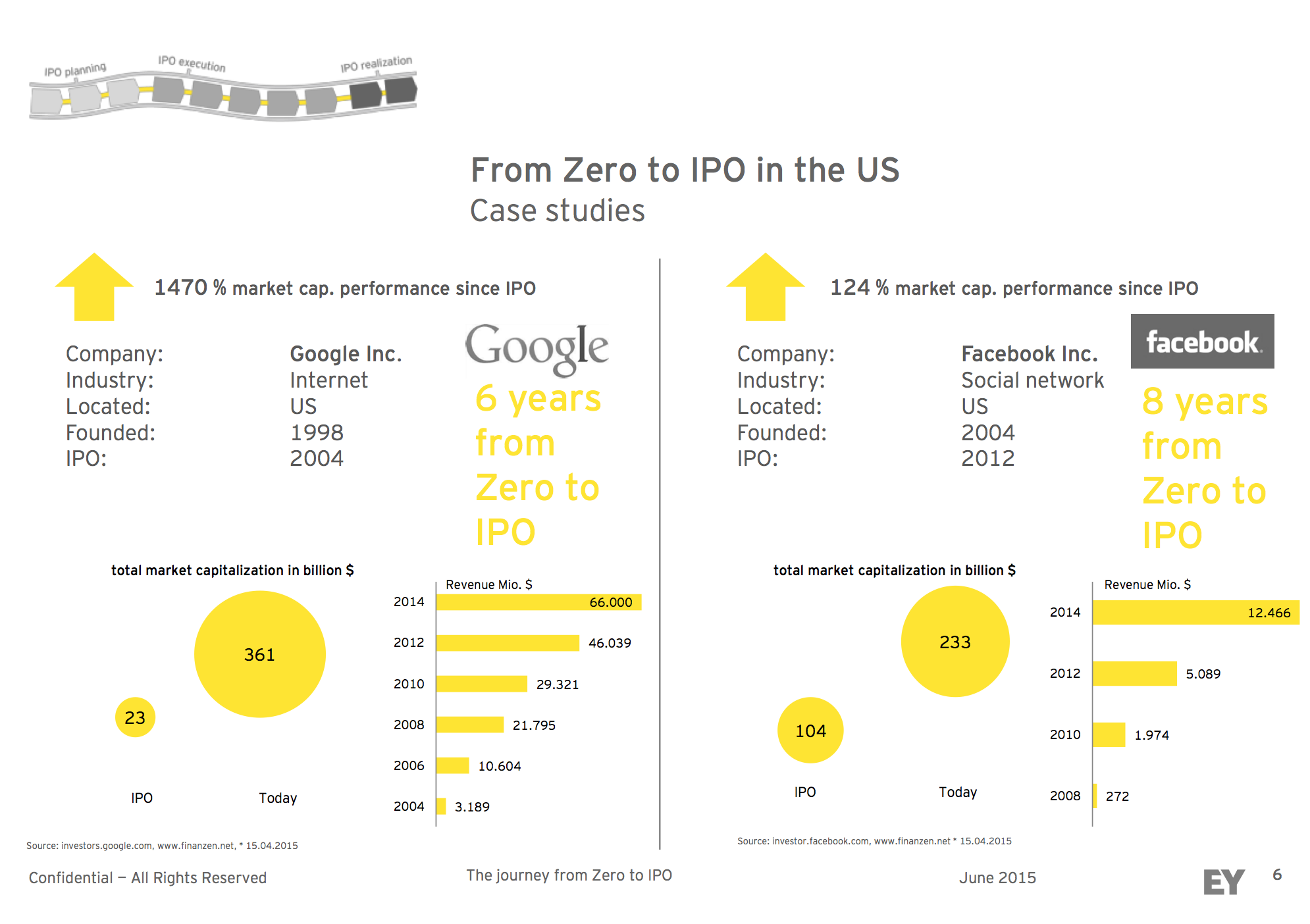
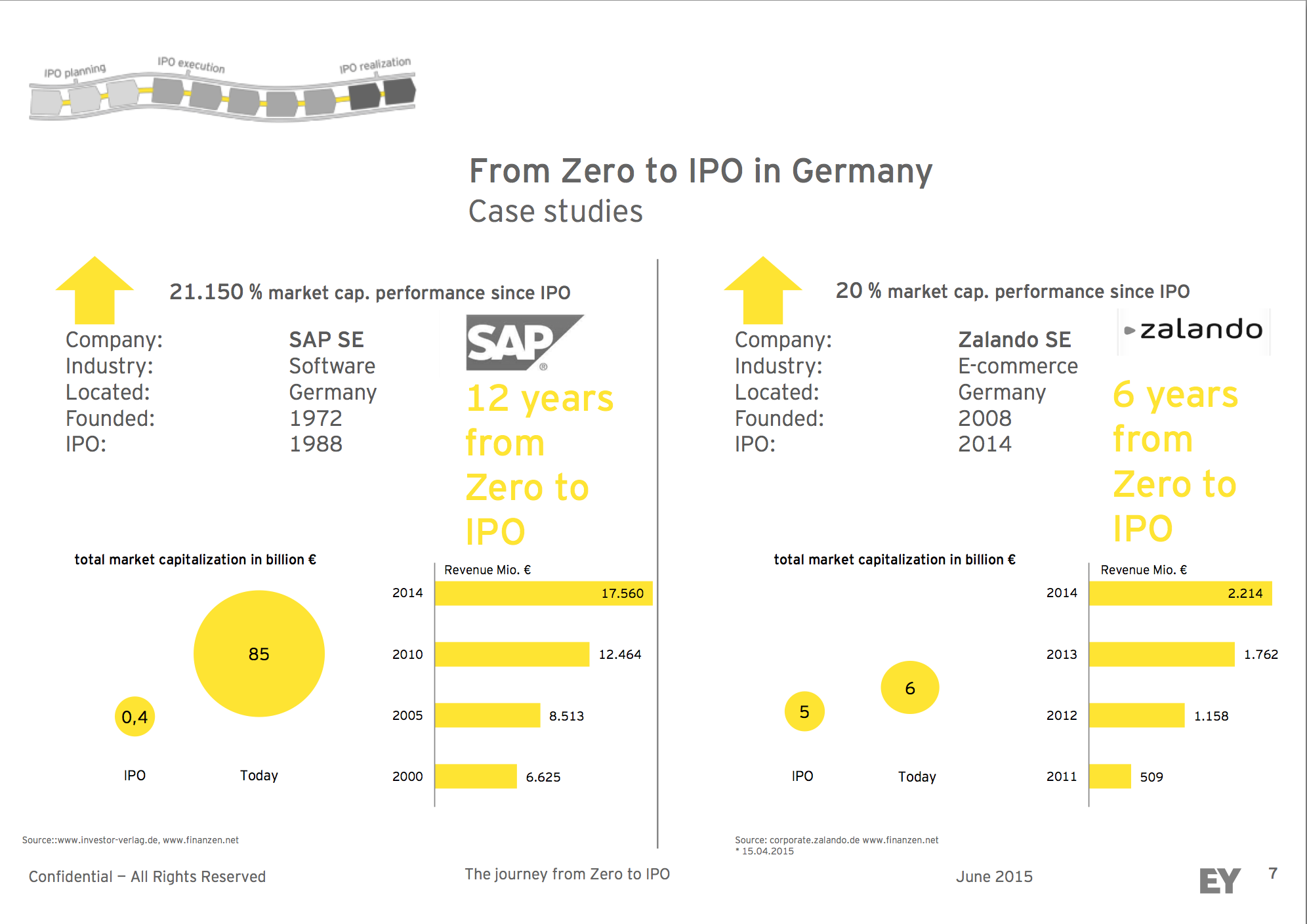
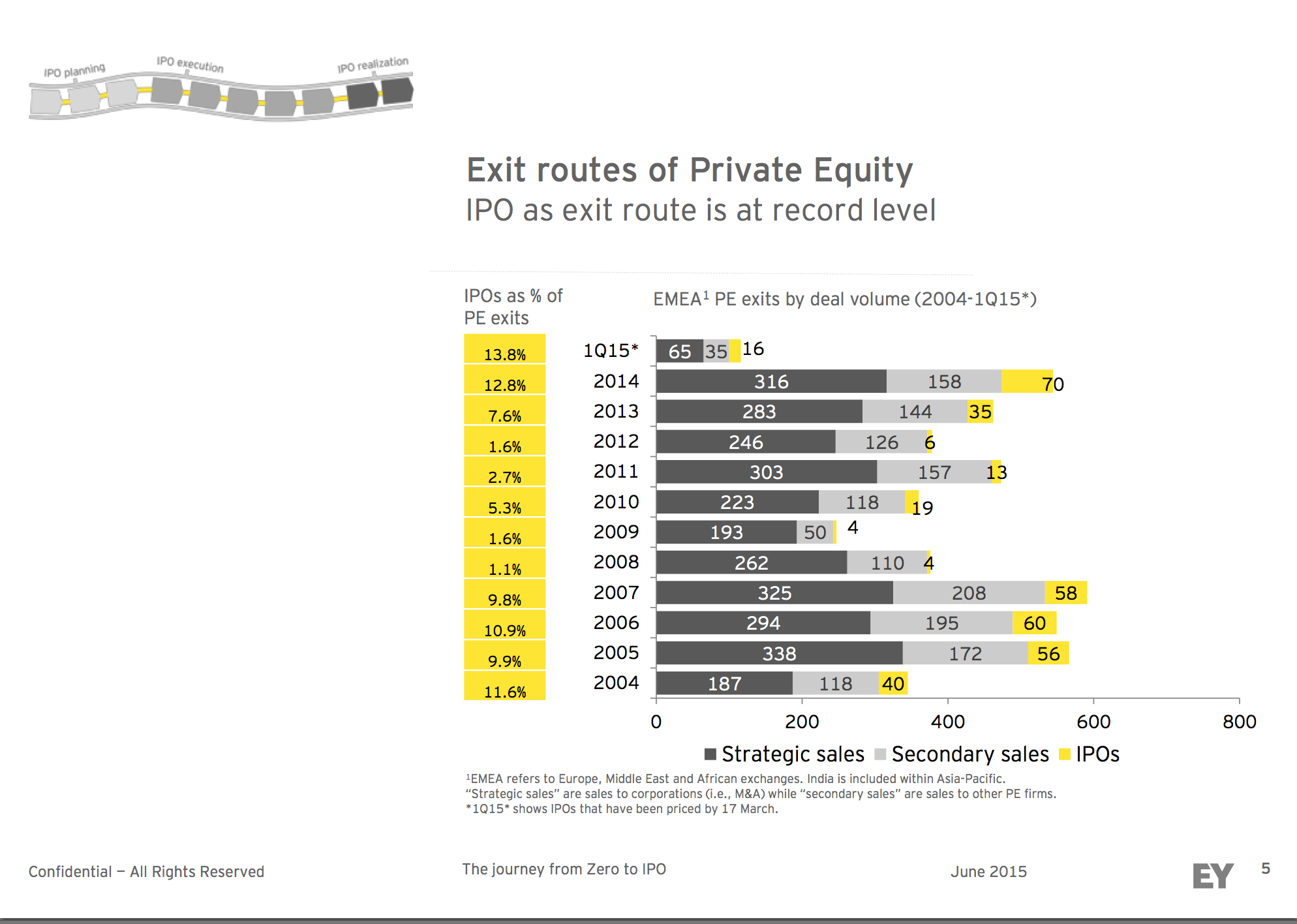
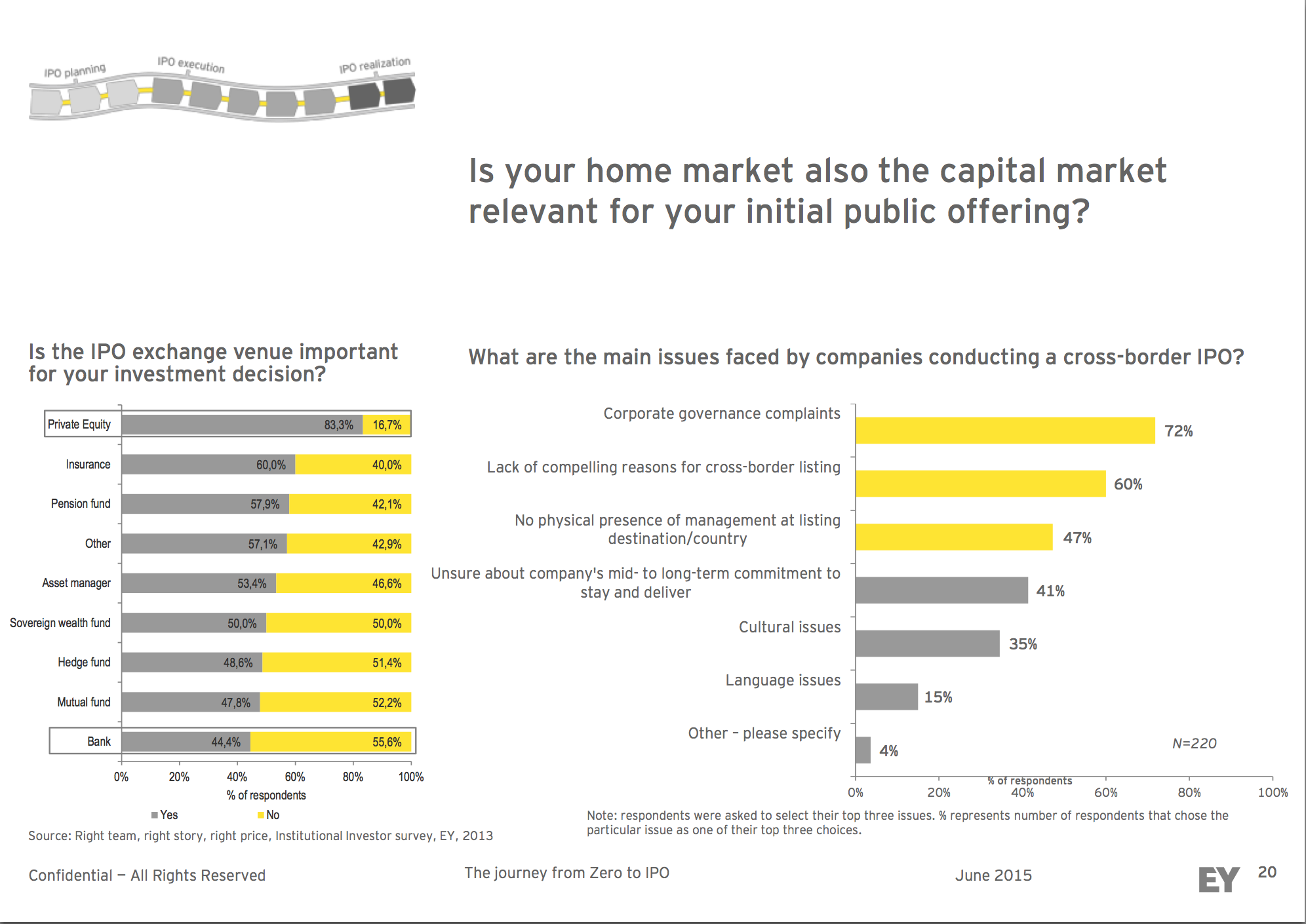
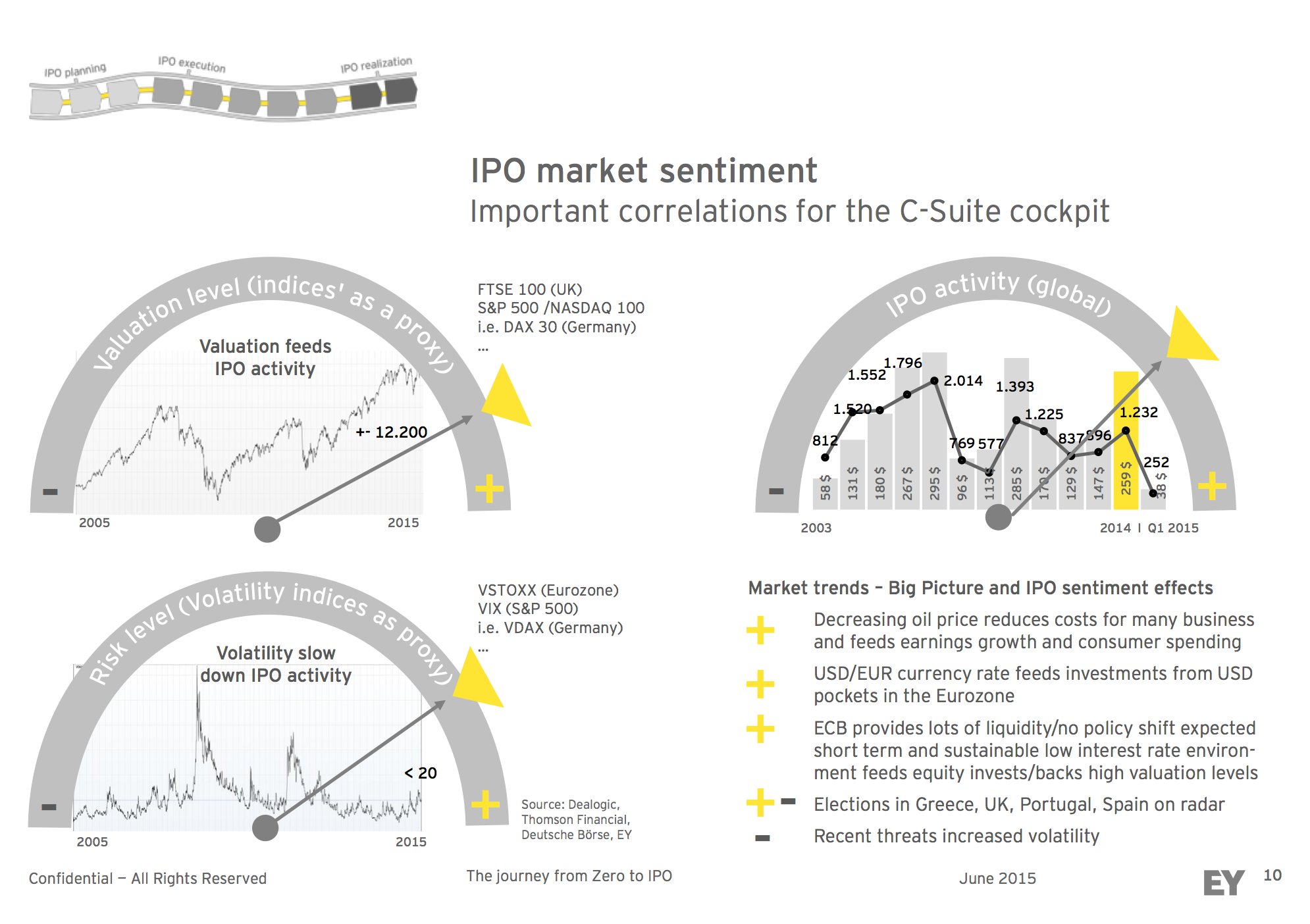
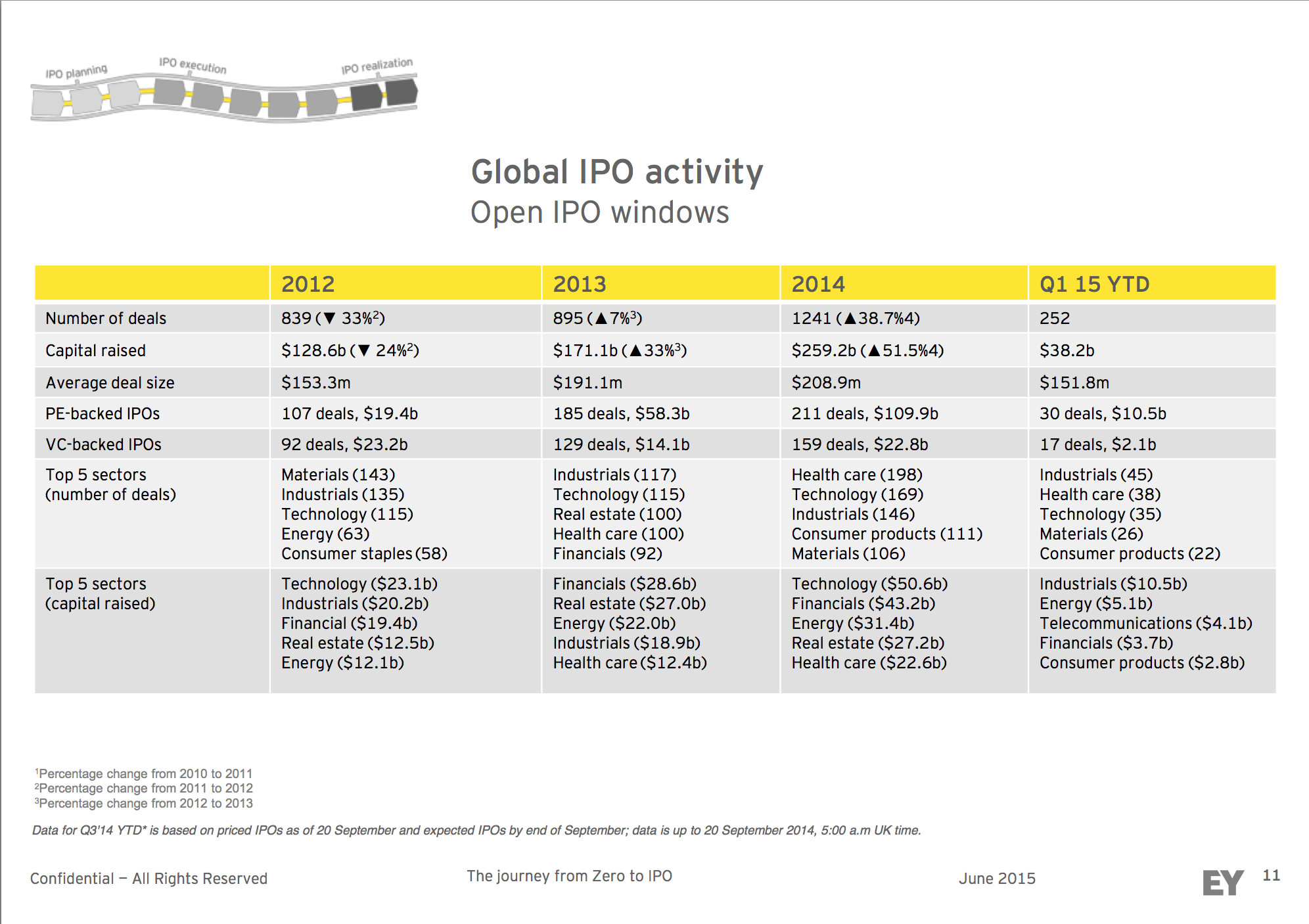
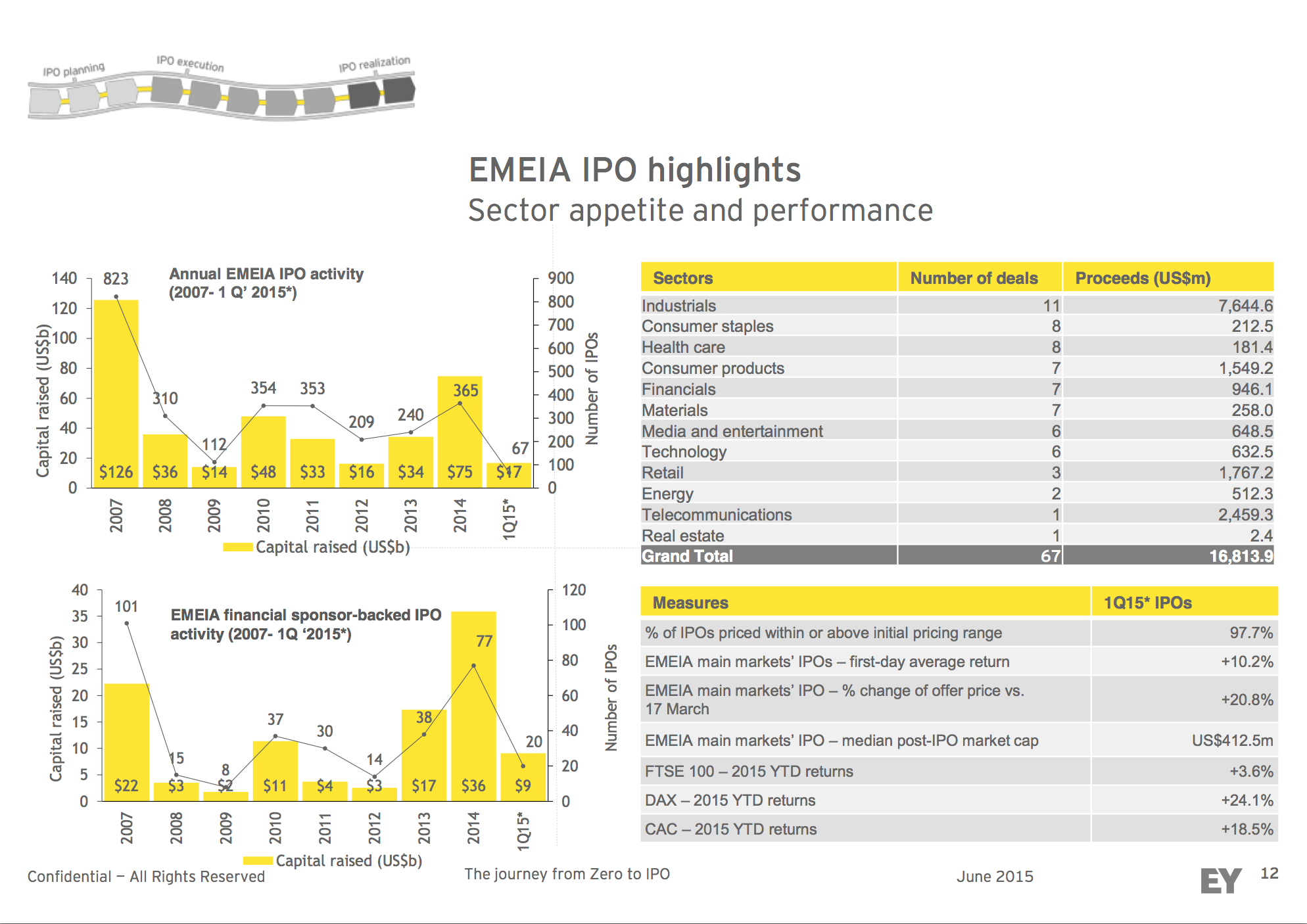
The event gives me further hope there is a growing community of resources to help startups in the Frankfurt area, although many could have attended just for the free lunch. Most importantly I wanted to share with you the informative presentation E&Y gave on The Journey from Zero to IPO. IPO as an exit route is at an all time high for European PE companies. That being said, public companies in Germany have suffered with after market performance relative to other exchanges, especially for technology companies. In addition transparency concerns along with performance force German companies to stay private or look elsewhere. Valuations are lofty and entrepreneurs should continue to use this to their advantage while they last.
Full deck here

Getting Trendy
Mary Meeker's @kpcb's 2015 Internet Trends Report is out. Always a must read. A few interesting point for me:
- The impact of the Internet on businesses, healthcare, government and education has barely scratched the surface. The Internet has dramatically evolved consumer's habits which sometimes makes us forget how many other industries have yet to reap the benefits.
- Internet hasn't truly reached the phone yet. Only 30% with subscription services. But where it has reach has created an anytime, anywhere user desire that is blowing up the existing infrastructure of business services. Buy buttons!
- Users generating content are 'customizing' their Internet experience. Highly personalized experiences. In addition user generated content and reviews are fueling the sharing economy.
- Drone use cases and growth is stunning. The government got out of the way.
- Millennials expect flexibility, are tech savvy and are on-demand. The technology gap between Millennials and the rest is large, but the gap that will exist between Millennials and Generation Z will be enormous.
- China is mass, India is new. Xiaomi has created an amazing and dominant IoT ecosystem in China is a very short time period. Is it the next Apple? The majority of Internet traffic and e-commerce in India is via mobile, the highest of all developed countries.
What part of the report is compelling to you?
http://www.kpcb.com/internet-trends

To Build or Not
Recently I've been asked the same question many times over: how do you decide if you want to build a product in the first place? My answer is very basic and always the same. Here it is:
1. Exactly what problem will this solve? (value prop)
2. For whom is that problem solved? (target market)
3. How large is the opportunity? (market size)
4. How is success measured? (metrics/revenue strategy)
5. What alternatives are available? (competitive landscape)
6. Why you? (differentiator)
7. Why now? (market window)
8. How will the product get to market? (g2m strategy)
9. What are critical success factors? (solution requirements)
10. How to measure success / make money? (financial plan)

Penny wise, pound foolish
Recently the CEO of a startup asked me for advice on a decision she was about to make on a software purchase, aka a cash commitment. Her company had launched beta product and the commercial release is right around the corner. Market awareness is ramping up and they have a lot of inbound sales activity. A nice problem for any startup.
The CEO is doing her best to maximize resources and maintain capital efficiency, knowing that a rainy day fund is important because not everything goes according to plan. But with the company's momentum, efficiently is becoming more difficult to realize and a lack of systems exposes the problems further. The company doesn't have the platforms to support scale. She is having a mental debate on using internal resources to build a basic solution on open source to patch the holes or buy a commercial platform that can scale as the company grows.
Reallocate development resources with no cash outlay or spend cash today? There are many commercial options that come in different shapes and size across all price ranges. Most importantly, most of them are up and running in hours with minimal customization. Open source is amazing…a free, complete solution that is ‘good enough’ to meet requirements and which can be customized to specific needs. But open source require a developer time to implement and maintain. For her that means pulling a developer from the product to operational systems.
Don't be penny wise and pound foolish. Go commercial. Most if not all business software today is feature rich, yet easy to use for quick implementation, and most importantly it's priced economically for small companies to grow into it. Keep the team on the important tasks, and outsource the rest. Always money well spent.

The Pitch Club
One guarantee about startup pitch events is there will be excitement and passion as hopeful entrepreneurs give their elevator pitch over and over again. I got to see this first hand at the Pitch Club event held in Frankfurt recently. The contest brought selected inspiring startups from the local Rhein-Main region to 'pitch' to a crowd of investors. Entrepreneurs had 10 minutes to shine and then field questions from the audience. The quality of the presentations and business ideas were solid, on par with similar events in other regions.
Notwithstanding the enthusiasm, a gap exists between the needs of the companies vs the investor funding and support in this region. Technology and talent are strong, but productizing to create commercial solutions is weak. In addition entrepreneurism means risk, and as Thomas Schulz wrote in his Spiegel article with Ben Horowitz - ‘Business failure is stigmatized in this country’. This is reflected in how startups are funded. They get enough capital to survive but not enough to attack opportunities. Startups become the 'living dead' by satisfying a niche as competitors gobble up the market share. As the article also points out, SAP is still the only German software company with international status. There is a reason for this, and it isn’t talent or technology.
@jogebauer drilled into the subject with a blog Why VC is Failing in Germany. His premise is that VCs "don't have the funds necessary to take risks". Seed and early stage investing is high risk, high reward and small cap VCs can't create a true portfolio to spread the risk across several startups. While there some merit to this premise, the root cause and fundamental issue is the engrained nature of not taking risks.
The mentality needs to change. Do you agree?